>>>>>>>>This is an interview with Occupy California student movement by Tasos Sagris and Sissy Doutsiou from Void Network for the antiauthoritarian Greek newspaper Babylonia. People from the Occupy California / Occupy Everything! student movement visited Greece during May/June 2010 and they talked in BFest and in the Occupied Self-Organized Park of Exarchia about the student struggles in California, New York and all other states of U.S.A.
1. What is the Occupy California movement & when did it start?
The Education Crisis Movement in California emerged in the summer of 2009 when it became clear that the University of California (UC) system, which encompasses 10 campuses across the state, would be introducing massive austerity measures in the upcoming semesters. These massive tuition increases of 32%, layoffs of unionized workers and cuts in classes and services can all be understood as steps towards the privatization of public education in California. Administrators and state politicians have used the current economic crisis as a cover for implementing these plans for structural adjustment and the further financialization of the university. In this supposed 'crisis' they continue to sell bonds to finance massive university construction projects and these bonds are pledged against future tuition increases. This neoliberal scheme of privatization is being implemented on the backs of ever more indebted students and the destruction of organized labor in the education sector.
The movement exploded across the UC system as school began in Fall of 2009 with walkouts, marches and occupations of school buildings. Workers, faculty and students joined together in exciting yet fragile alliances to fight against the various austerity measures being proposed that year. This energy climaxed during the week of November 18 as the UC Regents (the California Governor appointed politicians who oversee the UC system) met at UCLA for three days to vote on the proposed measures. Students attempted to block the meetings and scuffled with police in UCLA while marches and rallies were called at every major campus in the state. The ultra leftist and insurrectionary anarchist tendencies in the movement occupied many buildings, some with barricades and some open, throwing much of the UC system into chaos that week. Riot police from various agencies across the state were eventually forced to storm these campuses and fight with the occupying insurrectionists in order to regain control. By the end of the week and in spite of the massive display of resistance, the regents had voted to implement the whole austerity plan and many students and allies had been arrested.
Some occupations and demonstrations continued over the following months and these climaxed again on March 4, 2010. This date had been set back in Fall 2009 as a national day of action at schools and universities. While the height of conflict in the UC system was definitely during the end of November 2009, a whole new wave of resistance emerged in public K-12 schools, community colleges and state schools in the March 4 mobilizations. There were too many walkouts to count and in some cases, the more radical elements in the mobilizations stormed interstate freeways battling police and bringing traffic to a halt for hours. What began in California as a movement in the university system had expanded to a nation-wide struggle at all levels of education.
2. What is the cause of your fight and what forms of struggle are you using?
As the movement grew in intensity there emerged a number of contradictions within it that exposed the varying goals of its participants. Even the administrations of the various schools attempted to portray themselves as part of the movement. Their agenda of recuperation revolved around trying to manipulate the radical mobilizations into simply lobbying the state of California for more money without changing the structure of the university system, let alone that of society. This administration campaign was most clear in the lead up to March 4 when administrators, politicians and reactionary faculty teamed up to discourage any demonstrations on campuses and instead encouraged everyone to attend carefully managed rallies on the steps of the state capitol in Sacramento and to pursue lobbying as a way of attaining more money for public education.
Another tendency that emerged within the movement and claimed to represent 'the masses' was composed of official campus student groups, some sympathetic faculty and a whole range of moderate socialist organizations from on and off campus such as the ISO. This centrist wing of the movement had the goal of 'saving public education' and keeping the university an accessible institution. The general assemblies across California were dominated by these groups and they tended to mobilize around non-confrontational and passive forms of demonstration such as rallies and marches. These right wing trotskyists, moderate reformists and carreerist student activists used the language of democracy, accountability and transparency to describe their actions and take the moral high ground, even though their decision making processes never matched their rhetoric. Much of their work revolved around deescalating the energy of the movement and channeling it into more controlled manifestations, in an attempt to gain bargaining power and legitimacy in the eyes of Administrators.
The most explosive and radical element in the movement found itself constantly at odds with these first two elements. The ultra left tendencies of insurrectionary anarchists and communists were quick to push the envelope of struggle in the growing movement and established militant occupations of campus buildings as their primary tactic. These forces, which never established any formal organizations, were composed primarily of radical students, 'summit hopping' anarchists, and some faculty and workers. They understood the fight on the campuses to be a front in a larger fight against capitalism and the violent economic restructuring that has followed the major crisis of the neoliberal epoch. They communicated primarily from various communiques released from seized buildings and organized in more clandestine networks of various crews, affinity groups and meetings that stretched across the state.
Time and again, their actions set the tone of the overall mobilizations and expanded the repertoire of acceptable tactics. By early 2010 these tactics included open and barricaded occupations, massive dance parties, blockades of roads and small night time riots. The energy generated from these radical displays of resistance and confrontation was what propelled the movement forward and time and again the more reactionary and recuperative forces would simultaneously criticize these actions and attempt to capitalize off of them for their own purposes. While many people were turned off by the more secretive and inaccessible nature of this more militant organizing, the spontaneous participation of thousands of students and allies in these confrontational acts of escalation demonstrated a thirst on the part of the movement for ways to get involved outside of listening to speeches at rallies and signing petitions.
3. What does it mean for you “a movement with no demands”?
Some of the more radical and militant forces within this movement have adopted the slogan 'Occupy Everything, Demand Nothing'. For these tendencies, the act of issuing demands immediately empowers decision makers such as administrators and politicians and orients the movement in the direction of the halls of power. The movement becomes reduced down to the radical wing of a lobbying effort whose fate is in the hands of those in the state who have the power to meet the demands or send in the riot police to crush the resistance. The first occupations chose to issue no demands to power. They turned their backs on the administration and the state and instead oriented themselves to the students and young people anxious about their future and looking for an outlet for their rage. 'Occupy Everything' was the cry that emerged from these occupations. It was a call to the people to take action and seize what belongs to everybody. Instead of asking power to improve conditions in education and the overall society, 'Occupy Everything, Demand Nothing' prescribes the immediate communization of space and confrontation with capital as the only means forward even if the autonomous and communized zones that emerge are only temporary at this point in the struggle.
4. For many people in USA there is a criticism of privilege of the students in the states. There is also a criticism of separation between the students and the other society, between the workers and the students, between the white and the people of colour. What is your opinion about these separations and how you are fighting back?
There is no denying that students in the University system are indeed very privileged in the class hierarchy in the US. However these privileges are quickly fading away in this round of capitalist restructuring. The universities are now cranking out students burdened with heavy debt into a society with no jobs and no future. Most students (even the majority of privileged university students) have to work throughout their time in school, many in low paying service industry jobs. So it is important to remember that even though these struggles have been centered around the campuses (where there is a physical concentration of young people) they are simultaneously struggles of students and struggles of young workers (or future workers). On top of this, there have been moments throughout the past months where organized labor in the education sector has been intimately involved in the mobilizations thus adding even more to the sense that the Education Crisis Movement is in reality a student-worker movement. While many of the alliances between students and workers have decomposed more recently, it is important to note that some local unions such as AFSCME (which represents campus janitors, the lowest level on the campus hierarchy) continue to be very supportive and integral to the movement.
Even though this movement emerged in 2009 from the UC system (the most privileged part of the public education system in California) in response to the specific austerity measures being implemented in that sector, it has now spread to the community colleges and K-12 public schools across California and the country. This is one of the most important directions the movement can go since this much broader range of schools is facing even more serious attacks in this round of neoliberal restructuring and has always been neglected by the state. The populations that attend community colleges tend to be working class or poor and are primarily people of color. The fact that many of these students (mostly part time) embraced the March 4 call for a national mobilization is a sign that this movement could become much more powerful as more and more marginalized people take the energy in new directions and directly confront the foundations of class oppression and exploitation in US society.
Among the radical and militant wing of the movement there has been a general rejection of so called 'identity politics' which has put the insurrectionists at odds with some entrenched people of color organizations, feminist groups and others on and off campuses. This rejection is understandable. Time and again, liberal identity politics have been used in the US to derail radical calls for escalation and confrontation with power and in some ways this is a legacy of the failures of the 1960s generation whose ghosts are omnipresent on UC campuses like Berkeley. Instead of focusing on structural changes in society, many of the remnants of this past era focus solely on giving specific marginalized people the opportunity to climb the ladders of power and any attempts to destabilize these ladders are derided as racist and dangerous to vulnerable populations. Whenever an occupation or a small riot would occur, regardless of the makeup of its participants, these groups would issue the same cookie cutter denouncements of the actions as being only accessible to privileged white men and irresponsibly putting people such as undocumented immigrants at unnecessary risk.
Despite the rejection of these counter revolutionary identity politics, the structures of white supremacy and patriarchy in US society remain extremely important pillars of exploitation and oppression that must be confronted head on and destroyed. In their haste to abandon these reactionary trends, some radical elements of the movement have been overly dismissive of issues related to privilege and have helped to burn important bridges. It is vital that this growing militant movement finds ways to deal effectively with institutional racism and white supremacy along with its attack against capitalism, both on an off campus. Ignoring these core components of power in the US and seeing them as mere distractions will ensure that these mobilizations will eventually sputter and fail.
5. What is “Electro-Communism”? ...what is the influence of d.i.y. rave parties in the creation of an enthusiastic wave youth movement of social disobedience?
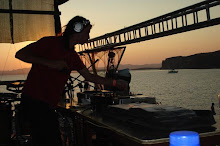
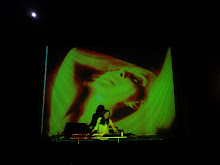
Electro-Communism is a term that originally emerged from the Education Crisis Movement in Santa Cruz during the first occupations of Fall 2009. It refers to the use of massive dance parties as ways to create temporary occupied spaces (in plazas and open areas) as well as a tactic from which to launch more militant actions. The dance parties function as very accessible ways for movement participants to mingle and find common cause with others who are just looking for a party while helping to politicize those who did not join the party for reasons other than to have fun.
Occupations have been launched out of these massive rave-like parties and in some cases the parties have been used to defend existing occupations. Masses of young people dancing and enjoying themselves present a formidable obstacle to riot police attempting to evict an occupation. There have also been instances where the parties have spontaneously evolved into militant riots although constantly maintaining somewhat of a party atmosphere with hip hop and electronic music blasting in the streets as students and radicals confront police, build barricades and destroy property.
These parties also serve as ways to relax, socialize and let off steam for those constantly involved in the stressful day to day work of building and maintaining the movement. This aspect should not be downplayed!
6. Do you believe that your movement can turn university campus in zones of social war and how can you expand your social and political influence?
The California Education Crisis Movement was not successful in its most immediate goals of halting the austerity measures being administered to the UC system. However, it was very successful in the sense that it unleashed a large and militant new wave of mobilizations in the US at a time when there seemed to be no response from anarchists and the Left to the brutal structural adjustment programs being imposed in this moment of neoliberal crisis. Much of the energy on the UC campuses has now died down, but for a few months movement participants found themselves in a constant state of social war with the campus as their primary battleground. This has been an inspiration to many across the US and a new generation of radicals has cut their teeth in these struggles. This is our most important victory.
The hangover from the death of the antiglobalization movement and the constantly declining antiwar movement haunted radicals in the US for nearly a decade. The movement that emerged on the UC campuses and was inspired by those in Greece, Mexico, South Korea and France is a real turning point away from this sad period. This new generation is unencumbered with baggage from these previous failures and has already begun to make history. Their influence is already being felt outside the so-called 'student movement'. At a recent demonstration in San Francisco against the transit police who murdered Oscar Grant on New Year's day 2009, hundreds of demonstrators clogged metro platforms and disrupted train service for several hours. The following week one of the cops involved in the shooting was fired by transit officials spooked by the spectre of more disruptions. The vast majority of those who clogged the metro platforms were young people from the campuses who now saw common cause with movements against police brutality after their participation in the Education Crisis Movement. What has happened in California has the potential to be about much more than education and involve many more people than students and some education sector workers. It is our job as radicals to ensure that this happens and the revolt spreads far and wide.
for more info:
for more info about Void Network:







 Posts